
Baby eye color calculator
Updated · What Will My Baby Look Like AI
Pick your eye color and your partner's, and add your parents' if you know them: the calculator gives your baby's chances of brown, green or blue eyes from the two-gene model taught in school genetics. It is free and runs in your browser.
Hazel counts as green and gray as blue: the two genes in the model only tell brown, green and blue apart.
Baby eye color chart by parents' eye colors
Without the grandparents, the calculator gives these odds. Each row is the same whichever parent is the mother.
| Parents' eyes | Brown | Green | Blue |
|---|---|---|---|
| Brown + brown | 89% | 8% | 3% |
| Brown + green | 67% | 28% | 6% |
| Brown + blue | 67% | 17% | 17% |
| Green + green | 0% | 89% | 11% |
| Green + blue | 0% | 67% | 33% |
| Blue + blue | 0% | 0% | 100% |
Why grandparents change the odds
Brown hides green and blue, and green hides blue, so a brown-eyed parent can carry a blue or green copy without showing it. Their parents' eyes tell you how likely that is. For a brown-eyed parent with a blue-eyed partner:
- Brown, both of their parents brown: 75% brown, 13% green, 13% blue.
- Brown, one parent brown and one blue: 50% brown, 13% green, 38% blue.
If the colors you enter can't come from those grandparents in the model (two blue-eyed grandparents and a brown-eyed parent, say), the calculator leaves that pair of grandparents out and tells you.
What our generator drew for three couples
Three of the AI-generated couples on our examples page, with the eye colors we see in their photos, the calculator's odds, and the eyes the generator gave their baby (made 2026-11-09). A picture is one possible child, not the most likely one.


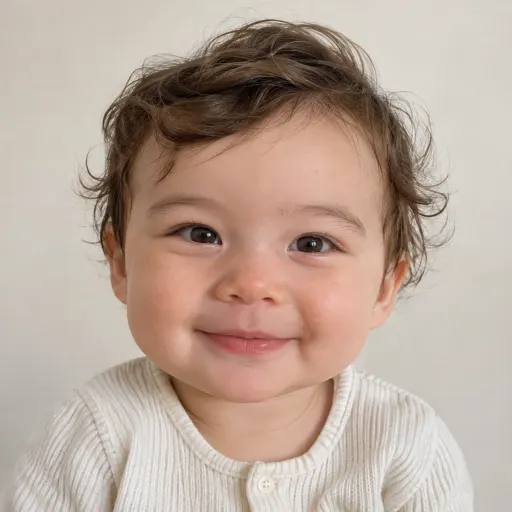


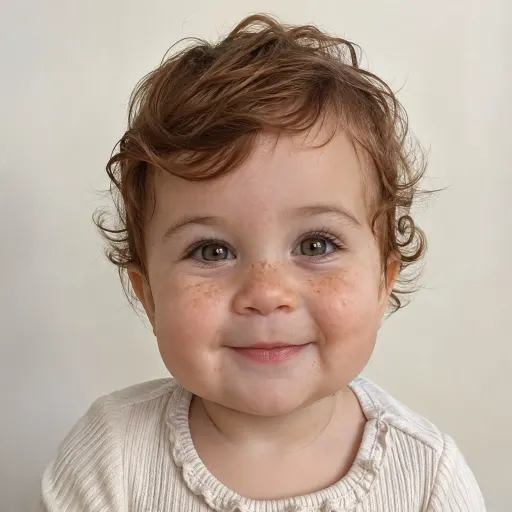


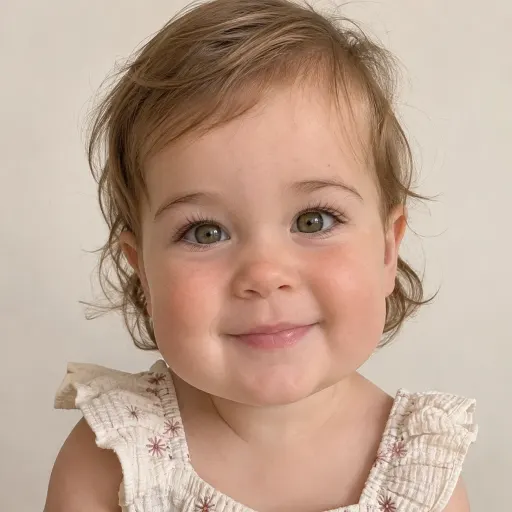
See the whole face, not just the eyes
Add one photo of each of you and the AI draws your possible child with features from both, at 9 months to 25 years. The first set is a free preview.
How the calculator works
- Two genes are used. The first decides brown (it wins) or not brown; the second decides green (it wins) or blue, and only shows when the first gene isn't brown.
- You and your partner each carry two copies of each gene and pass one of each to the baby, picked at random.
- We start with every version equally common, so no guess about ancestry is built in. Your eye color, and your parents' if you add them, rule out the combinations that can't give those colors; the rest are weighed by how likely they are.
- The odds are added up over every combination of what you could pass on. Nothing you enter leaves your browser.
The model is a simplification. Real eye color comes from many genes, which is why hazel, gray and amber eyes exist and why families sometimes surprise the chart. If both your families have had only brown eyes for generations, add the grandparents: the odds of brown go up.
Baby eye color questions
What color eyes will my baby have?
It depends on the hidden copies each of you carries, not only on the color you see. With one brown-eyed and one blue-eyed parent the model gives 67% brown, 17% green and 17% blue; two blue-eyed parents give blue almost every time. Use the calculator above for your own colors.
Do babies get eye color from mom or dad?
From both: one copy of each eye color gene comes from the mother and one from the father, picked at random. Neither parent's color wins because of who they are, only because some versions (brown) hide others (green, then blue).
Can grandparents' eye color affect my baby?
Yes, through the hidden copies. A brown-eyed parent whose own mother or father has blue eyes must carry a blue copy, so with a blue-eyed partner the chance of a blue-eyed baby rises from 13% (both grandparents brown) to 38%.
Can two blue-eyed parents have a brown-eyed baby?
In this two-gene model, no. In real life it is rare but it happens, because more genes than these two shape eye color, and some blue or gray eyes carry versions that can give a darker color in a child.
When do babies' eyes change color?
Many babies, especially with light skin, are born with blue or gray eyes that darken over the first year as the iris makes more pigment; babies born with brown eyes usually keep them. Most eye colors settle by about the first birthday, and a few keep shifting a little for another year or two.
How accurate is a baby eye color calculator?
It gives fair odds for brown versus blue and green, the part these two genes explain. It can't predict hazel, gray or in-between shades well, and it is not a genetic test. Treat it as a fun guess, like the baby pictures on this site.